RULE has designed and built PoE network switches in Shanghai since 2007 — 119 models in nine families, shipped to integrators, distributors and ISPs worldwide.
Shanghai Rule Security Co., Limited. — RULE — designs, manufactures and ships Power over Ethernet switches from Shanghai. Founded in 2007, it has stayed in one category: the switch between a camera, an access point or a controller and the rest of the network — hence 119 models rather than 1,190, and almost every model we sell is one we build. Engineering, sourcing, quality and sales share one building, so a PoE or port question reaches the people who can change the hardware.
The range is one supply chain: PoE switches of 4 to 24 ports, 2.5G models for Wi-Fi 6/6E access points, managed 10G for aggregation, L2/L3 managed with PoE for VLAN and routed uplinks, industrial DIN-rail units, optical converters and accessories. Ports run 4 to 48, uplinks reach 40G, and 802.3af/at budgets are published per model.
Every model starts as a reference design tested against three constraints customers feel: PoE budget per port and in total, thermal headroom in a fanless enclosure, and surge and ESD on the copper ports. Layout, transformers and firmware defaults are revised until all three hold at the target price. Since hardware, firmware and test procedure are ours, a different port count or a private mould is a manufacturing change, not a project we resell.
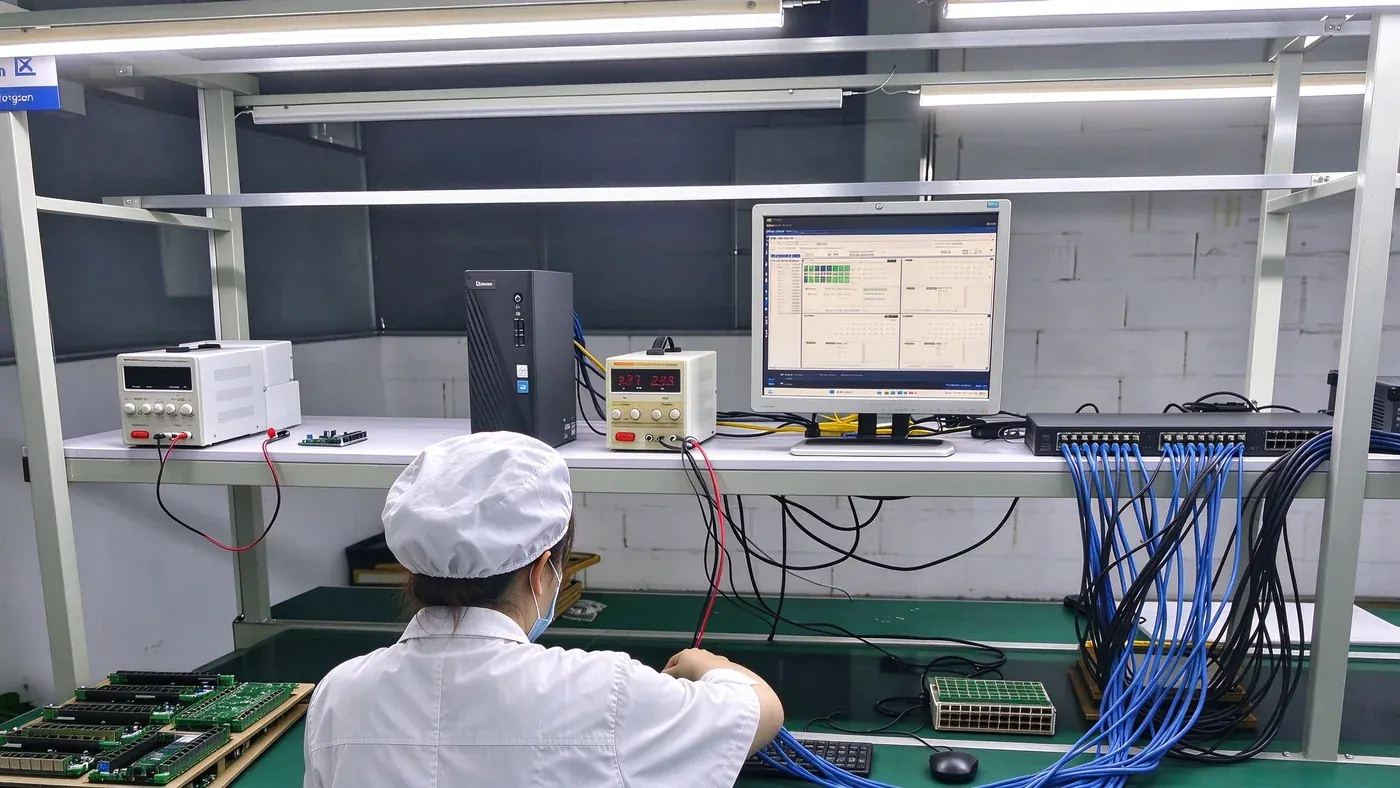
Each unit is powered, every port exercised, PoE output measured, and the firmware build with serial number recorded before packing; samples then take a longer burn-in and a heat-rise check. Incoming transformers, RJ45 connectors, capacitors and PoE controllers are inspected on arrival. A distributor can drop-ship without opening every carton, and an RMA starts from a serial number.
RULE switches are FCC listed and CE compliant, with RoHS declarations for the full range. CE, FCC and RoHS documents plus test reports ship with the quotation or order on request, so a tender package closes without a second email round.
Orders leave Shanghai by air or sea with invoice, packing list and certificates matched to the destination. Cartons hold 30 pcs up to 8 ports and 12 pcs for 16/24-port models; accessories follow the datasheet. MOQ is 20 pcs: stock ships in 5-7 working days, OEM in 14-20 days, every unit with a 24-month warranty.
Distributors fill a catalogue gap without a second brand's spares; integrators standardise on one PoE budget, one firmware behaviour and one contact; ISPs and industrial buyers rely on fanless, wide-temperature links that run unattended for years. Send your model list for a stock quote, or the port map, PoE load and enclosure limit, and we will name the closest existing model.
Company: Shanghai Rule Security Co., Limited. · Founded 2007 · Shanghai, China · MOQ 20 pcs · Stock 5-7 working days · OEM 14-20 days · Warranty 24 months.
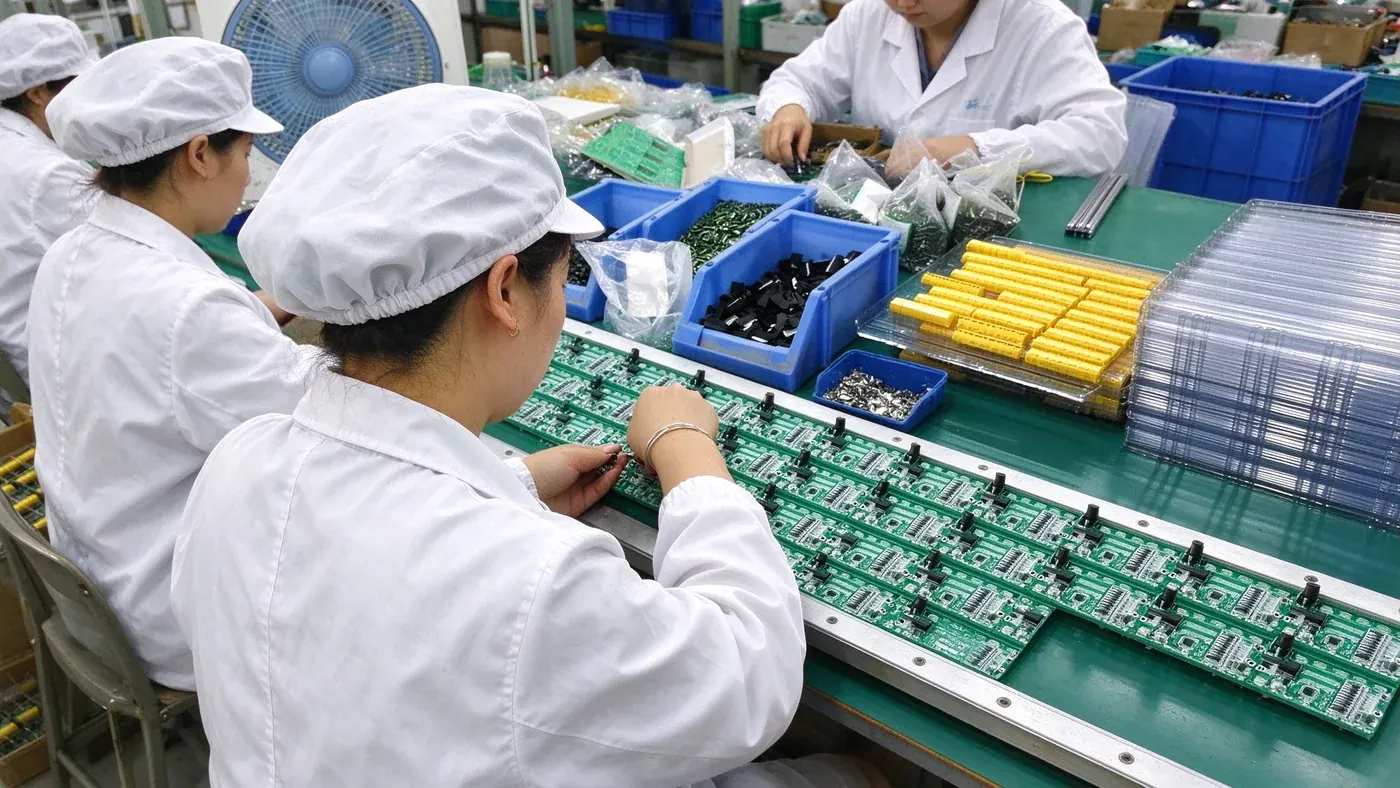
SMT, board assembly, final assembly and burn-in test — photographed on the lines that build the switches we ship.


Real projects, the configuration that was specified, and why that split was chosen — anonymised, without invented numbers.
A security integrator needed to replace a mixed-brand camera network on a two-building campus without re-cabling. The design split the PoE load across 24-port L2 PoE switches per building, aggregated them over 2.5G, and sized the budget before ordering.
Read the case →A system integrator automating a plant floor needed switches that survive a cabinet at 55 °C, keep a ring closed after a cable fault, and reach a substation room 400 m away over fibre.
Read the case →A regional ISP had 1G uplinks saturated by evening traffic and wanted a 10G access layer that could be rolled out rack by rack without replacing the whole estate at once.
Read the case →A city hotel had 180 rooms on a 100 Mbps Wi-Fi 4 system and one copper riser per wing. The refresh added PoE access switches on each floor, 2.5G links to the new access points, and a 10G riser between the two wings.
Read the case →A retail chain with 34 stores was running a different unmanaged switch in almost every shop. The standard design put one managed L2 switch behind each POS network and aggregated the flagships at head office.
Read the case →A cold-storage operator wanted cameras inside freezer rooms at −25 °C but could not put electronics there. The design kept PoE switches in the warm corridor and ran hardened cabling to the camera positions.
Read the case →

 English
 Español
 Français
 Deutsch
 Italiano
 Português
 العربية
 Русский
 日本語
