
 English
 Español
 Français
 Deutsch
 Italiano
 Português
 العربية
 Русский
 日本語
The need
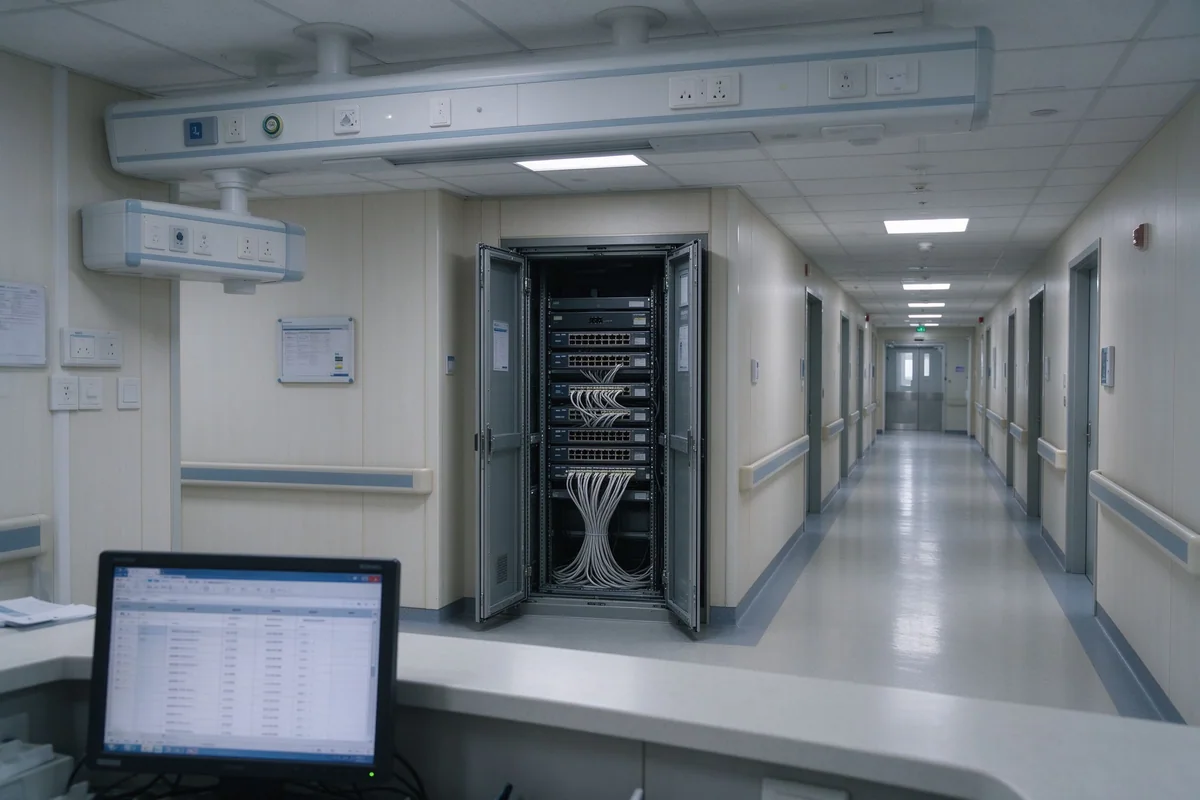
Each ward had bedside monitors, nurse-station PCs and imaging viewers, plus patient Wi-Fi on the same physical cabling. The hospital's requirement was blunt: clinical devices must not share a broadcast domain with guest traffic, and no ward may depend on a single unmanaged switch. Night-shift staff also needed to power-cycle a bedside link without calling IT.
What was specified
| Model | Qty | Role in the project |
|---|---|---|
| RS1024K-P16-2S-M | 12 | Ward PoE distribution, clinical and guest VLANs, SFP uplink to the floor |
| RS1005K-P4-M | 16 | Nurse-station PoE for workstations, printers and badge readers |
| RS1025K-4LG-2S-10G | 4 | 2.5G link for imaging viewers at the diagnostic rooms |
Why that split
The ward switch carries the VLAN separation, which is the requirement that actually matters clinically. The small PoE units sit at nurse stations where only four ports are needed and where a port-level reset is useful at 3 a.m. The 2.5G units exist only where imaging viewers pull large studies, not across the whole floor.
Result
- Clinical and guest traffic are separated at the ward, not only at the core.
- A bedside link can be reset from the nurse station without an IT call-out.
- Imaging viewers got their own 2.5G path without re-cabling the ward.
Client and site are anonymised. The configuration is a reference design, not a quotation; VLAN policy, medical-device approval and redundancy requirements are set by the hospital's own IT and clinical engineering teams.
