
 English
 Español
 Français
 Deutsch
 Italiano
 Português
 العربية
 Русский
 日本語
The need
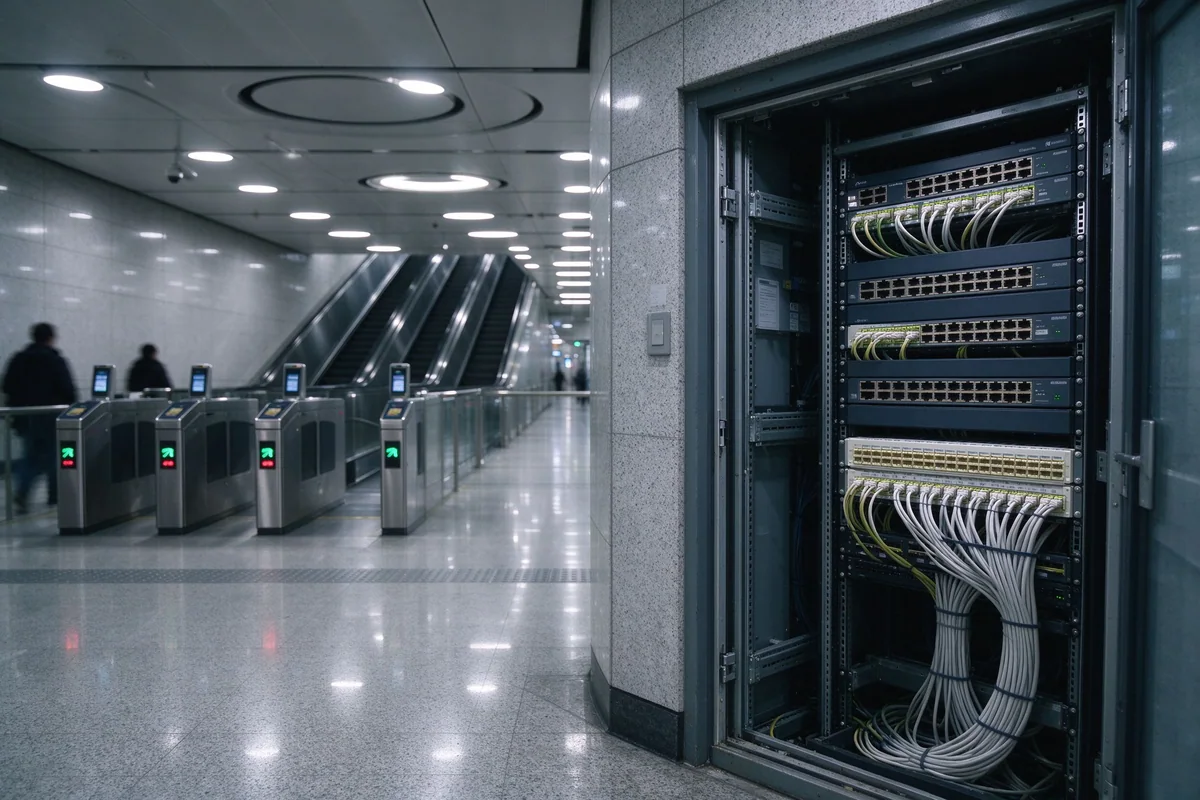
The station had one equipment rack and no space for a second, so fare gates, cameras and the new help points all had to land in the same cabinet. Help points need PoE and must keep working while the ticket hall network is being serviced. Camera runs from the 2000s are copper-to-fibre pairs, and re-cabling a platform was not possible in a shutdown window of a few hours.
What was specified
| Model | Qty | Role in the project |
|---|---|---|
| RS1024K-P24-4S-10G-M | 4 | Platform and concourse PoE: cameras, help points, access readers, 10G SFP+ uplink |
| RS1024K-P48-4S-10G-M | 2 | Ticket hall and equipment room aggregation, 48 ports, 10G to the station core |
| RS1001G-1S | 8 | Gigabit media converters that keep the legacy camera runs on fibre |
Why that split
PoE sits on the platform because the cameras and help points are there, and the 24-port size fits the existing cabinets without a new enclosure. The 48-port switches aggregate the four platform switches and give the fare gates a single 10G path into the station backbone, which is where the video traffic actually goes. Media converters let the old camera pairs stay in place, so the platform work stays inside the shutdown window.
Result
- Ticketing, video and help points share one managed platform with VLAN separation.
- Per-port power data shows which camera or help point is drawing more than expected.
- Platform cabinets keep their existing cabling; only the switches and uplinks changed.
Quantities in the table are the planned build, not a bill of materials for a specific tender.
